

Many buyers assume spring is the only time that makes sense to start house hunting. Warmer weather, more listings, and a busy market feel reassuring. But recent data suggests January may quietly offer one of the best opportunities for buyers who are watching their budget closely.
Here is why January deserves a closer look.
Home Prices Tend to Dip in January
According to Lending Tree January has consistently ranked as the least expensive month to purchase a home. Price per square foot often hits one of its lowest points of the year during this time, while spring typically brings higher demand and rising prices.
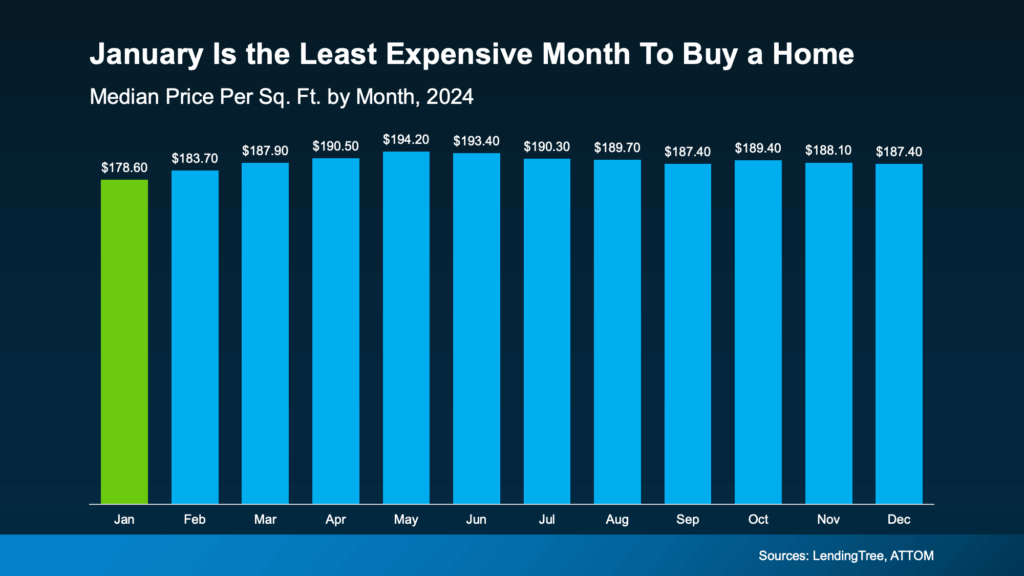
The difference can be meaningful. Using the most recent full year of data, buyers who closed on a typical 1,500 square foot home in January paid about $23,000 less than buyers who purchased in May. While the exact savings depend on the home, location, and price range, the pattern itself shows up year after year (see chart below):

Now, your number is going to depend on the price, size, and type of the home you’re buying. But the trend is clear. For today’s buyers, it’s meaningful savings, especially when affordability is still tight for so many households.
Fewer Buyers and More Flexible Sellers
Winter is traditionally one of the slowest periods in the housing market. Many buyers pause their search, assuming it makes sense to wait until spring. That slowdown changes the dynamics of the market in several important ways:
- Fewer buyers competing for the same homes
- More flexibility during negotiations
- A lower chance of multiple offer situations
With fewer people actively shopping, buyers often have more breathing room to evaluate homes without feeling rushed.
Winter also highlights which sellers are serious. Those who list during slower months often have real reasons to move, making them more open to discussion. As Realtor.com explains:
“Less competition means fewer bidding wars and more power to negotiate the extras that add up: closing cost credits, home warranties, even repair concessions. . . these concessions can end up knocking thousands of dollars off the price of a home.”
Negotiations may include price adjustments, closing cost credits, repair agreements, or flexible timelines. While not every seller will offer concessions, buyers are more likely to be heard and taken seriously.
Is Waiting for Spring the Better Choice?
Here’s the real takeaway. When you remove the pressure and frenzy that comes with the busy spring season, it becomes much easier to get the home you want at a price that fits your budget.
But if you wait until spring, more buyers will be in the market. So, waiting could actually mean you spend more and you’d have to deal with more stress.
Now, only you can decide the right timing for your life, but don’t assume you should wait for warmer weather before you move.
Buying in January gives you: less competition, potentially lower prices, and more motivated sellers. And those are three perks you’re not going to see if you wait until spring.
Bottom Line
If buying a home is on your radar, winter may offer more opportunity than expected. January can provide a calmer market with real financial advantages for prepared buyers.
Curious what buying in January could look like for you? Let’s review the numbers and explore the homes currently available in our area.

Vesta Schneider
Realtor®
Luxury Homes | Relocation | Investments
Keller Williams Realty McKinney
📞 302-530-7314
📧 vestaschneider@yahoo.com