The Language of Turkish Carpets: Understanding Traditional Motifs and Their Meanings
Discover the rich symbolism woven into every thread of authentic Turkish carpets at House of Motifs in downtown McKinney
Turkish carpet motifs are more than decorative patterns—they’re a visual language that has communicated hopes, beliefs, and stories for thousands of years. When you understand these traditional symbols woven into authentic Turkish carpets, each piece becomes a narrative rather than just a beautiful floor covering. At House of Motifs, located in the heart of downtown McKinney, we bring these ancient stories to life through our carefully curated collection of handwoven Turkish carpets and unique imported home décor. Whether you’re searching for a statement piece for your living room or a meaningful gift that tells a story, our boutique showcases the artistry and cultural heritage that makes Turkish textiles truly exceptional.
The Silent Stories Beneath Your Feet
Turkish carpets have served as more than decorative elements for thousands of years. They are visual poems, silent storytellers that communicate the weaver’s hopes, fears, beliefs, and dreams. Each motif carries deep meaning, passed down through generations of Anatolian weavers who transformed their inner worlds into tangible art.
The practice of incorporating symbolic Turkish carpet motifs dates back to when Turkish tribes led nomadic lives across Central Asia. As these communities migrated westward, they brought their artistic traditions with them, eventually settling in Anatolia (modern-day Turkey). Here, they blended their heritage with influences from Byzantine, Persian, and Islamic cultures, creating the rich tapestry of designs we recognize today in traditional Turkish carpet motifs.
Why Turkish Carpet Motifs Matter in Design
Unlike mass-produced rugs, traditional Turkish carpets were—and continue to be—deeply personal expressions. Women weavers would spend months or even years creating a single piece, choosing each Turkish carpet motif with intention. These weren’t random decorative choices; they were deliberate messages meant to:
- Protect the home and family from evil forces
- Express personal desires and life stages
- Celebrate cultural identity and lineage
- Document social customs and beliefs
- Communicate feelings that couldn’t be spoken aloud
As the renowned carpet expert Jon Thompson notes, these Turkish carpet motifs weren’t merely decorative themes—they were believed to possess actual power, generating “a field of force able to interact with other unseen forces.” To the weaver, incorporating a protective symbol wasn’t just artistic expression; it was practical magic.
Popular Turkish Carpet Motifs and Their Meanings
Protection Turkish Carpet Motifs: Guardians Woven in Wool
The Evil Eye (Göz/Nazarlık)
Perhaps the most recognized protective symbol in Turkish culture, the eye motif appears frequently in traditional carpets. The belief that certain people possess an “evil eye” capable of causing harm through jealous or malicious gazes led weavers to incorporate protective eye symbols. These motifs, often rendered in striking blue and white, act as shields—watching over the household and deflecting negative energy back to its source.
Scorpion (Akrep)
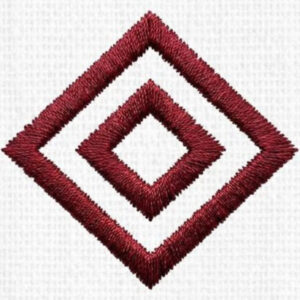
Despite its fearsome reputation, the scorpion motif serves as protection against external threats and enemy attacks. Positioned strategically, often near the carpet’s borders, these diamond-shaped figures with hooked edges stand guard at the threshold, preventing malevolent forces from entering the home.

Love and Family Turkish Carpet Motifs: Weaving Bonds
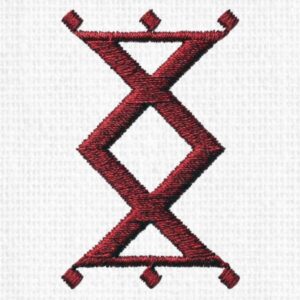
Fetter/Bukağı
This distinctive motif represents the chain-like cuffs placed on horses’ front legs to prevent them from wandering. In carpet symbolism, it beautifully expresses the desire to keep families and lovers bound together. The bukağı appears as interlocking geometric shapes, symbolizing unbreakable bonds, devotion, and the hope that relationships will endure forever. This same symbolism inspired the Turkish tradition of tying engagement rings together with a red ribbon.
Hands on Hips (Elibelinde)
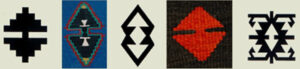
One of the most ancient and revered motifs, elibelinde depicts a stylized female figure with hands placed on hips—a stance that conveys confidence and power. This symbol celebrates motherhood, femininity, fertility, and abundance. Throughout Anatolia, the elibelinde motif serves as a tribute to women’s central role in family and community life.
Ram’s Horn (Koç Boynuzu)
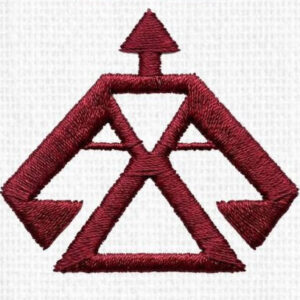
Representing masculine strength, this curved motif symbolizes heroism, power, and fertility. It’s often paired with the elibelinde to represent the harmonious union of masculine and feminine energies, creating balance within the home.

Marriage and Coming of Age Turkish Carpet Motifs
Earring (Küpe)
In traditional Anatolian culture, earrings were essential wedding gifts. When a young woman wove the earring motif into her carpet, she was discreetly announcing her readiness for marriage—a silent communication to her family and community.
Hair Band (Saç Bağı)
Young girls in Anatolian villages traditionally kept their hair long and uncut until marriage. The hair band motif, representing the ornamental headpiece worn by brides, expresses the desire for marriage and the transition into womanhood.
Life and Spirituality Turkish Carpet Motifs
Tree of Life (Hayat Ağacı)
Rising vertically through the carpet’s composition, the Tree of Life represents continuous growth. It symbolizes the connection between earth and heaven, and the eternal cycle of existence. This motif represents immortality, spiritual ascent, and the universe’s constant evolution. Various trees—especially fruit-bearing ones like pomegranates—emphasize fertility and abundance.

Running Water (Su Yolu)
Water’s life-giving properties make it a universal symbol of purification, renewal, and continuity. The running water motif appears as meandering lines, zigzags, or wave patterns, representing both physical sustenance and spiritual cleansing. In regions where water is scarce, this motif holds even greater significance.

Star (Yıldız)
Stars illuminate darkness and guide travelers—both literally and metaphorically. In Turkish carpets, star motifs represent destiny, divine guidance, fertility, and happiness. The six-pointed star, known as Solomon’s Seal, has adorned Anatolian textiles since ancient Phrygian times, long predating Islamic influence.
Rose (Gül) and Carnation (Karanfil)
Floral motifs carry layered meanings in Turkish carpet art. The rose represents both divine and earthly love, while the carnation symbolizes renewal, new beginnings, and life’s fresh starts. These naturalistic designs flourished during the Ottoman classical period, when carpet artistry reached its zenith.
Identity and Heritage Turkish Carpet Motifs
Damga (Tribal Stamps)
Throughout history, Turkish families, clans, and tribes used distinctive symbols—damga—to mark their identity and property. These personalized emblems functioned like family crests, ensuring lineage continuity and protecting valuable possessions. Today’s logos and brand marks are modern descendants of this ancient tradition.
Bird (Kuş)
Birds soar between earth and sky, making them powerful symbols of spiritual messages, freedom, and transcendence. In Turkish carpets, bird motifs represent happiness, longevity, and messages from the divine. The eagle, particularly significant in Turkish culture, embodies strength, agility, and imperial power.
How Turkish Carpet Motifs Are Combined and Arranged
Understanding individual Turkish carpet motifs is just the beginning. Master weavers create complex narratives by combining symbols in meaningful ways. For instance:
- Fertility compositions might unite the elibelinde (feminine) with ram’s horn (masculine) motifs, surrounded by protective eye symbols to safeguard future children
- Protection borders feature repeated scorpion, hook, and amulet designs around the carpet’s perimeter, creating a defensive barrier
- Life cycle narratives might incorporate hair bands and earrings in a young woman’s carpet, progressing to fertility symbols and finally to the Tree of Life in pieces woven later in life
The arrangement, color choices, and relative sizes of Turkish carpet motifs all contribute to the carpet’s overall message. Traditional weavers followed cultural conventions while also expressing personal creativity and circumstances.
Three Main Categories of Turkish Carpet Motifs
Turkish carpet experts typically classify traditional motifs into three main structural categories:
1. Plant Motifs
These include flowers, leaves, trees, and fruits. They can be:
- Naturalistic: Recognizable depictions of tulips, roses, carnations, hyacinths, grape vines, and cypress trees that flourished during the 16th-17th centuries
- Stylized (Hatai): Abstract floral forms so transformed that their botanical origins become unidentifiable, featuring intertwining leaves, buds, and blossoms
Remarkably, historical records show Istanbul’s architectural tiles alone featured 312 distinct tulip motif variations, while antique tombstones displayed over 350 different tulip forms—demonstrating the incredible diversity within just one flower type.
2. Animal Motifs
Animal designs dominated Turkish decorative arts until the 16th century, when plant motifs became more prevalent. They include:
- Naturalistic: Recognizable eagles, doves, deer, horses, lions, and fish
- Stylized: Abstract animal forms, particularly birds, that retain essential characteristics while becoming geometric
The dragon motif—a mythological guardian with lion’s feet, serpent’s tail, and wings—represents one of the most powerful protective symbols, believed to guard hidden treasures and the Tree of Life itself.
3. Geometric Motifs
These patterns result from systematic arrangements of lines, angles, and shapes. Geometric motifs can be:
- Closed compositions: Self-contained within defined boundaries
- Open compositions: Continuing infinitely beyond the visible frame
- Interlace patterns (Geçme): Complex interweaving lines creating knots and borders
Geometric designs often incorporate mathematical precision and symmetry, reflecting Islamic artistic principles that emphasize pattern and repetition over representational imagery.
Using Turkish Carpet Motifs in Modern Home Decor
At House of Motifs, we celebrate these ancient symbols by offering authentic Turkish carpets that honor traditional craftsmanship while complementing contemporary interiors. Our downtown McKinney boutique welcomes you to experience these pieces in person, where you can touch the quality of hand-knotted wool, see the depth of natural dyes, and discover how each motif’s story resonates with your own. Here’s how to thoughtfully incorporate these meaningful pieces into your space:
Consider the Room’s Purpose
Match Turkish carpet motif meanings to room functions. Protective symbols work beautifully in entryways, while fertility and family motifs suit bedrooms and living areas. Tree of Life designs bring contemplative energy to meditation spaces or home offices.
Respect the Story
When you choose a Turkish carpet with traditional motifs, you’re welcoming centuries of cultural heritage into your home. Take time to learn about the specific symbols in your piece—this deepens your connection to both the carpet and the artisan who created it.
Mix Traditional and Modern
Turkish carpet motifs possess timeless appeal that transcends design trends. A geometric kilim with ancient protective symbols can anchor an ultra-modern minimalist space, while naturalistic floral designs complement traditional or transitional interiors.
Create Conversation
These carpets are natural conversation starters. Share the stories behind the Turkish carpet motifs with guests, transforming your decor into a cultural exchange opportunity.
Preserving an Endangered Art Form—Right Here in McKinney
Traditional Turkish carpet weaving faces challenges in our modern world. Industrial production, changing lifestyles, and the time-intensive nature of hand-weaving threaten this cultural treasure. That’s why House of Motifs is proud to bring authentic, handwoven Turkish carpets to the McKinney community. Each piece you choose to bring into your home helps:
- Support artisan communities in Turkey
- Preserve centuries-old techniques
- Maintain cultural identity and heritage
- Encourage younger generations to learn traditional crafts
When you shop at House of Motifs in downtown McKinney, you’re not just purchasing home décor—you’re becoming part of a global story of craftsmanship and cultural preservation. Our collection features pieces that honor the weavers who spend months creating each carpet, ensuring these stories continue to be told, one knot at a time.
Conclusion: More Than Decoration
Turkish carpet motifs transform floor coverings into cultural artifacts, communication devices, and protective talismans. They bridge past and present, connecting modern homes to ancient traditions. When you understand the language woven into these Turkish carpet motifs, you see them with new eyes—not just as beautiful decorative objects, but as profound expressions of human hope, fear, love, and faith.
Whether you’re drawn to protective eye motifs, fertility symbols, or geometric perfection, there’s a Turkish carpet speaking your language at House of Motifs in downtown McKinney. We invite you to visit our boutique and discover which ancient story wants to become part of your modern home.
Visit House of Motifs in Downtown McKinney
Looking for unique gifts or distinctive home décor pieces that carry meaning? Stop by our store in the heart of downtown McKinney to explore our curated collection of authentic Turkish carpets, imported textiles, and artisan-crafted home accessories. Our knowledgeable team is passionate about helping you find pieces that reflect your style while honoring centuries of cultural heritage.
Discover more about our collection and learn the stories behind each piece at houseofmotifs.com
Keywords: Turkish carpets, Turkish rug motifs, Anatolian carpets, traditional carpet patterns, Turkish kilim symbols, carpet motifs meanings, authentic Turkish rugs, handwoven carpets, Turkish textile art, home decor with cultural significance
Follow House Of Motifs :