
Renovate or Relocate? What To Know Before You Decide To Age in Place

A home can hold a lifetime of memories. From family gatherings and holiday celebrations to quiet mornings in your favorite room, the place you’ve lived for years often becomes much more than an address.
But as life changes, so do your priorities. The home that once checked every box may eventually require more upkeep, offer more space than you need, or present challenges you hadn’t considered before.
For many homeowners approaching retirement or already enjoying it, an important question begins to surface: Should I make changes to the home I already love, or would moving somewhere new make life easier?
There isn’t one answer that works for everyone. Your finances, daily routine, long term plans, and personal preferences all play a role.
Before making a decision, it helps to understand what each option could mean for your lifestyle and your budget.
Is Your Current Home Designed for the Years Ahead?
It’s easy to feel comfortable in a familiar home, especially when you’ve spent years creating a space that reflects your personality. However, familiarity doesn’t always translate into convenience as your needs evolve.
Consider how you use your home today compared to when you first moved in. A two story layout may have been ideal when your family was growing, but stairs could become less appealing over time. Bathrooms, narrow doorways, and raised entryways can also present challenges.
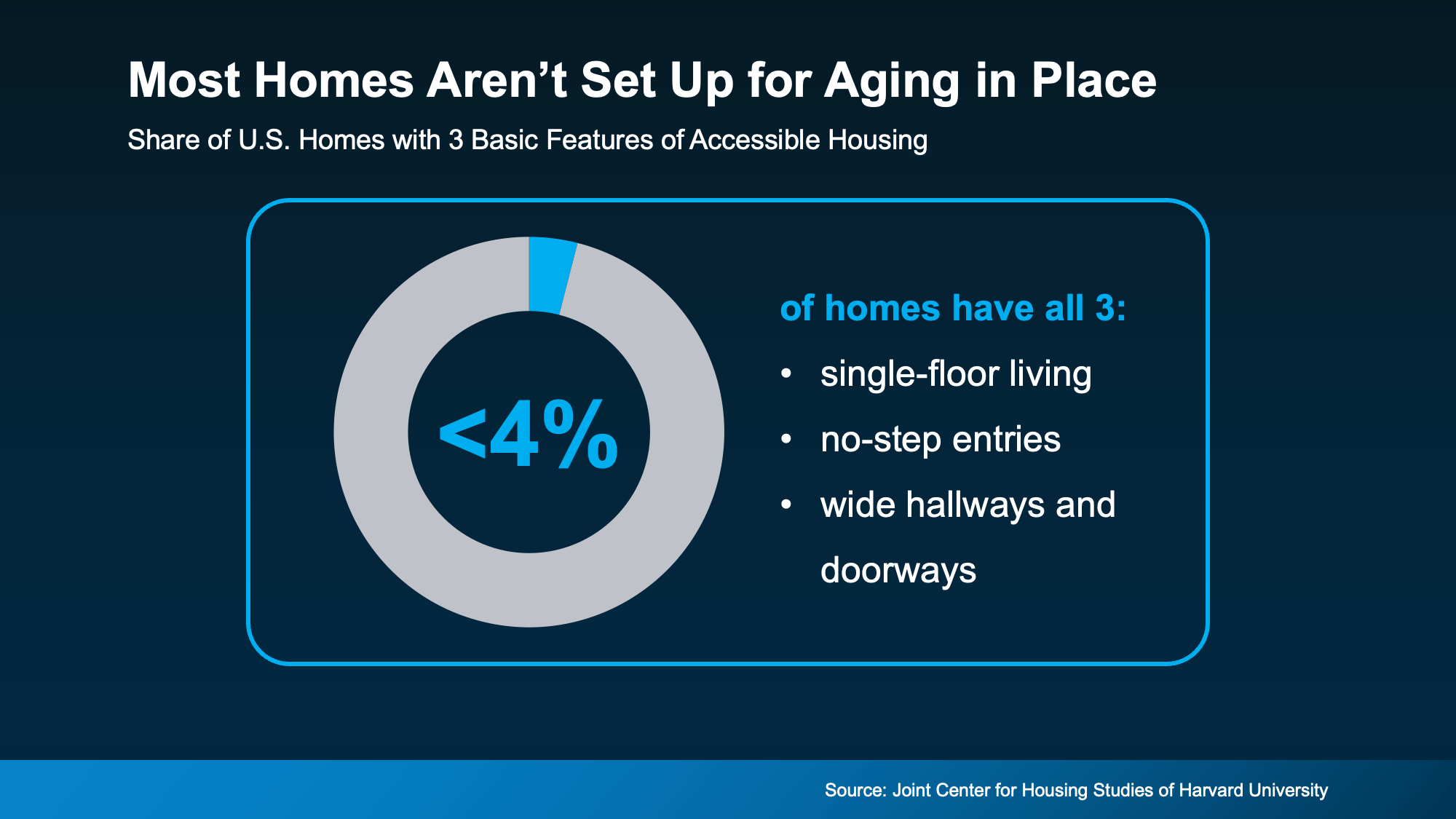
Research from the Joint Center for Housing Studies of Harvard University (JCHS) highlights just how uncommon fully accessible homes are.
According to its findings, fewer than 4% of homes offer essential accessibility features together, including single floor living, step free entrances, and sufficiently wide hallways and doorways (see graph below):
For homeowners hoping to remain in their current property for the foreseeable future, some modifications may be necessary.
The National Association of Home Builders reports that 56% of remodelers undertake projects focused on helping homeowners age in place.
These improvements can include bathroom safety features, showers with easier access, expanded doorways, improved lighting, and other adjustments that support greater independence.
While these changes can make a meaningful difference, it’s important to consider the full scope of the work.
Renovations come with expenses, scheduling decisions, and potential disruptions to your daily routine. Depending on the project, you may also need to prepare for unexpected repairs or additional costs.
Before committing to a renovation, ask yourself whether the improvements will truly make your home suitable for the years ahead or simply address a few immediate concerns.
Could Your Home Equity Create New Possibilities?
One of the biggest advantages of owning a home for many years is the opportunity to build substantial equity. Home equity represents the portion of your property’s value that you own after subtracting any outstanding mortgage balance.
For homeowners who purchased years ago, regular mortgage payments and long term appreciation may have created a valuable financial resource.
Jess Catorc, Co-Founder of Carry, explains:
“The way home equity builds and is used changes a lot depending on your stage of life. . . . For older homeowners, decades of mortgage payments and home-value growth can turn equity into a financial cushion.“
That financial flexibility may open doors you haven’t seriously considered.
Rather than investing a significant amount into renovating your existing property, you might be able to use proceeds from its sale toward a home that better matches your current priorities.
Perhaps you’re interested in a smaller property with less maintenance, a single story floor plan, or a neighborhood that offers convenient access to shopping, healthcare, and recreational activities.
Of course, the decision involves more than comparing home prices. Selling expenses, moving costs, property taxes, insurance, and any new mortgage payments should also be part of the conversation.
Understanding what your home could sell for and how much equity you could potentially walk away with is an important first step.
For homeowners in North Texas, reviewing current market conditions and available housing options can help turn a general idea into a realistic plan. One option you may consider if you’re entertaining a move is a 55+ plus community.
Why 55+ Communities Are Worth a Look
For some homeowners, moving isn’t simply about finding a smaller house. It’s about choosing a lifestyle that offers more convenience, opportunities to connect, and fewer responsibilities.
That’s one reason age restricted communities have become an option worth exploring.
Many 55+ communities are developed with the preferences of older adults in mind. Depending on the neighborhood, residents may have access to amenities and activities that encourage a more active and social lifestyle.
Rocket Mortgage identifies several potential advantages of these communities in the following visual:
Imagine having access to walking trails, fitness facilities, organized activities, or neighborhood gathering spaces without having to travel far from home.
Some communities also offer exterior maintenance services, allowing residents to spend less time handling certain property responsibilities.
However, not every 55+ neighborhood provides the same experience.
Amenities, homeowners association fees, maintenance obligations, community regulations, and available floor plans can vary significantly.
It’s worth visiting several neighborhoods, reviewing their costs and restrictions, and considering how well each one fits your lifestyle.
A community that looks appealing on paper should also feel like somewhere you’d genuinely enjoy living.
Before You Decide, Think Beyond the House Itself
Whether you’re considering a renovation or preparing for a move, the most important factors aren’t always found on a property listing or contractor’s estimate.
Think about what you want your everyday life to look like five, ten, or even fifteen years from now.
Would you prefer to remain close to longtime friends and familiar surroundings? Are you hoping to spend less time maintaining your property? Would living closer to family, medical services, or favorite activities make a difference?
It’s also worth evaluating how much financial flexibility you want to maintain.
Renovating may allow you to preserve the comfort and familiarity of your current home. Moving could offer a layout and lifestyle that require fewer adjustments over time.
Neither option is automatically better. The right choice depends on how your home supports the life you want to enjoy.
Bottom Line
Your home should continue to work for you as your priorities change.
For some homeowners, thoughtful improvements can make a familiar property comfortable for many more years. For others, selling and moving into a home designed for their current lifestyle may provide greater convenience and peace of mind.
If you’re considering your next chapter in North Texas, I’d be happy to help you explore your options.
We can review your home’s potential market value, discuss your available equity, and look at properties or 55+ communities that align with your goals.
The best next move is the one that helps you feel confident, comfortable, and excited about the years ahead.
Selling Soon | Vesta Schneider Real Estate
Looking For a New Home | Vesta Schneider Real Estate