As our communities continue to grow, so does our opportunity to create spaces where everyone feels seen, valued, and included.
One barrier we don’t always talk about openly, but many people experience every day, is ableism.
And for many of us, it’s not a familiar word.
What Is Ableism and Why It Matters for Inclusion
Ableism is the belief, sometimes obvious, often subtle, that there’s a “normal” way to think, communicate, or move… and anything outside of that is less than.
Most of the time, it doesn’t come from bad intentions.
It comes from what we’ve been taught, what we’ve seen, and what we’ve experienced.
That’s why this conversation matters.
Because when we understand more, we can do more.
What It Looks Like in Everyday Life
Ableism doesn’t always look like exclusion on purpose.
More often, it shows up in small, everyday moments.
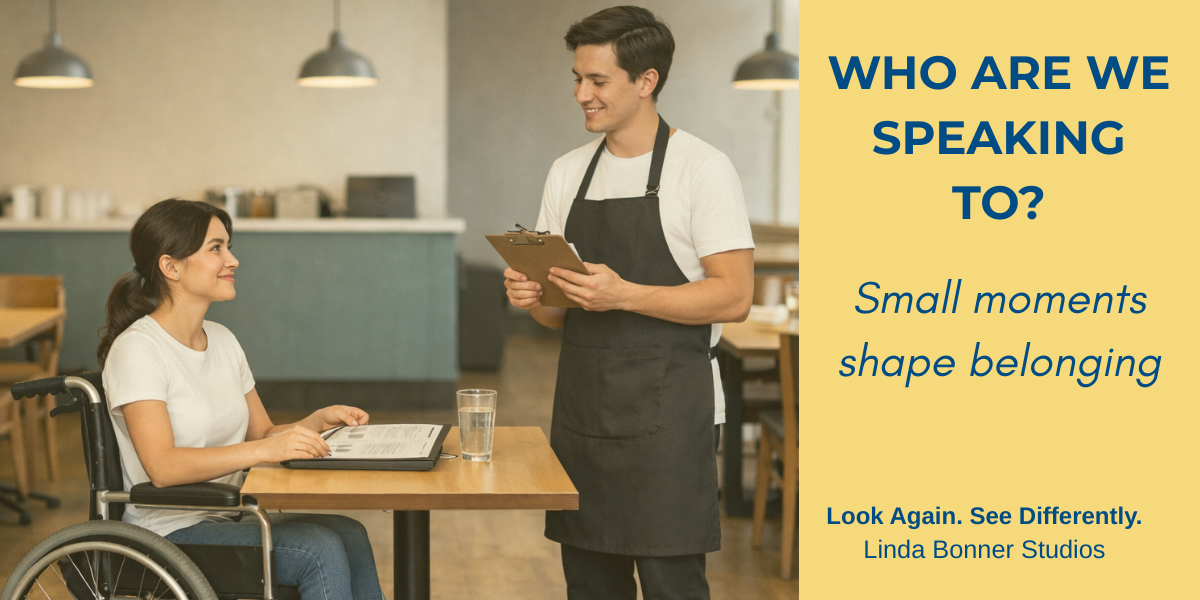
Moments like this one.
I was at a restaurant with my son, Kevin, who has Down syndrome. When the server came to take our order, they looked at me and asked, “What does he want?”
Kevin was sitting right there.
He’s capable of ordering his own meal. He has preferences, opinions, and a voice.
But in that moment, he wasn’t included in the conversation.
And here’s what’s important:
That interaction wasn’t unkind. It was familiar. It was automatic.
It’s also something many individuals with disabilities experience every day.
Other Ways Ableism Shows Up
You might recognize some of these moments:
- Speaking to a caregiver instead of the person
- Assuming someone can’t do something without asking
- Offering help without first checking if it’s needed
- Saying things like “you don’t look disabled”
- Using outdated language and terms
- Treating access as extra
- Designing spaces, events, or workplaces without accessibility in mind
None of these actions are usually meant to exclude.
But over time, they can make people feel unseen, unheard, or underestimated.
Why Inclusion Matters in Our Communities
People with disabilities are part of every part of our community—our neighborhoods, schools, workplaces, and local businesses.
Often, the biggest barrier isn’t the disability itself.
It’s the way environments, systems, and interactions are designed.
The good news?
That’s something we can change.
Simple Ways to Reduce Ableism and Build Inclusion
You don’t need to have all the answers to make a difference.
Small, thoughtful actions can create meaningful change.
Here are a few places to start:
In everyday interactions:
- Speak directly to the person
- Ask before offering help
- Pause before making assumptions
- Listen with openness and respect
In businesses and organizations:
- Consider accessibility in your space and communication
- Ask: “Who might this unintentionally exclude?”
- Include people with disabilities in planning and decision-making
In our community:
- Support inclusive events and programs
- Be intentional about who is represented and included
- Stay open to learning even when it feels unfamiliar
A Different Way to Think about Inclusion
Ableism isn’t about labeling people as “good” or “bad.”
It’s about treating everyone with dignity. Individuals with disabilities are part of our shared humanity and human diversity.
And it’s about what we choose to do with that knowledge.
Because inclusion doesn’t happen by accident.
It happens through small, consistent choices, made by all of us.
Moving Forward Together Through Action
We don’t have to get everything right to begin.
We just need to be willing to notice, to learn, and to try.
Because understanding is the first step.
What we do with it is what creates belonging and builds inclusive communities.
If your business, organization, or team is looking for simple, practical ways to build more inclusive environments, I offer speaking engagements and hands-on workshops designed to create understanding, spark meaningful conversation, and turn awareness into action.
Linda Bonner Studios is where creativity meets advocacy to build understanding, connection, and belonging. Through storytelling, speaking, and hands-on creative experiences, Linda help families, professionals, and communities move from uncertainty to confident, meaningful action.