
A bedroom tucked away from the rest of the house. A finished lower level with its own entrance. A bonus room that could become a private living area. Features like these may seem like simply extra space, but for some buyers, they can be a major reason to choose one home over another.
More families are looking for homes that can comfortably accommodate parents, adult children, grandparents, or other relatives. As multi generational living becomes more common, homes that offer additional space and privacy may have an advantage in the market.
Millions of Families Are Living Multi-Generationally
Multi generational households include three or more generations living together, and their numbers have been growing. According to Realtor.com, the number of these households increased from 3.2 million in 2014 to almost 4 million by 2024.
That growth is changing what some buyers prioritize during their home search. Instead of focusing only on the traditional number of bedrooms and bathrooms, they may also be looking for layouts that allow family members to live together while still having some independence.
Data from USAFacts also shows that multi generational living is more prevalent in certain parts of the country. The darker states on the map below represent areas where this type of household is more common (see map below):
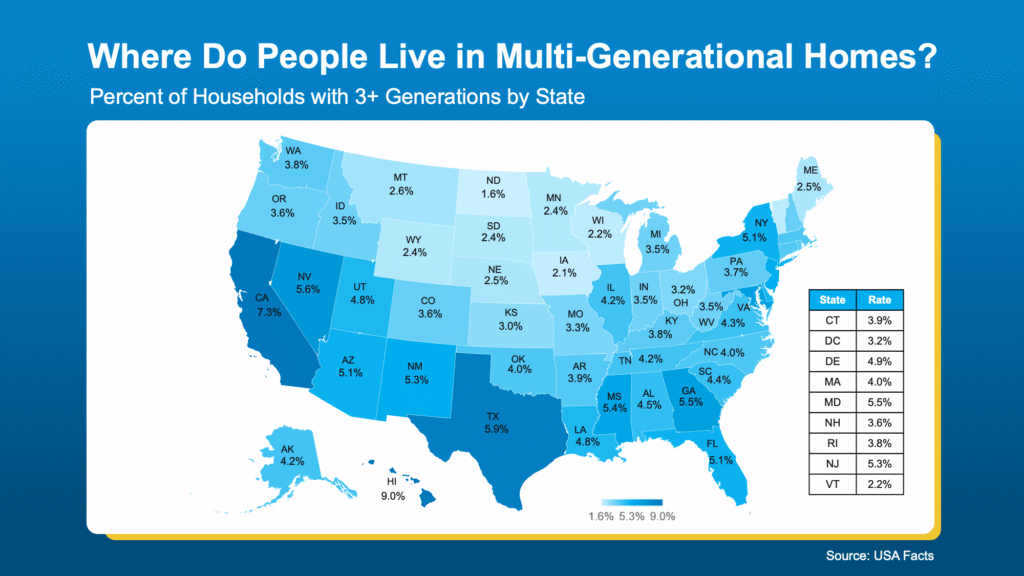
Location can play an important role in how valuable these features are to buyers. In markets where more families live together, a home with the right layout may appeal to a larger group of people.
Affordability is another factor. Sharing one property can allow family members to combine resources while helping with housing costs, caregiving, childcare, and other everyday needs.
For sellers with larger homes or flexible floor plans, that can create an opportunity.
Multi-Generational Houses Sell at a Premium
Homes designed for extended family living often come with higher asking prices. Realtor.com reported that the median asking price for a multi generational home in 2025 was $709,000 – roughly 65% higher than the $429,900 median for a standard house.
Part of that difference can be attributed to size, since these properties are often larger. But size does not explain the entire gap.
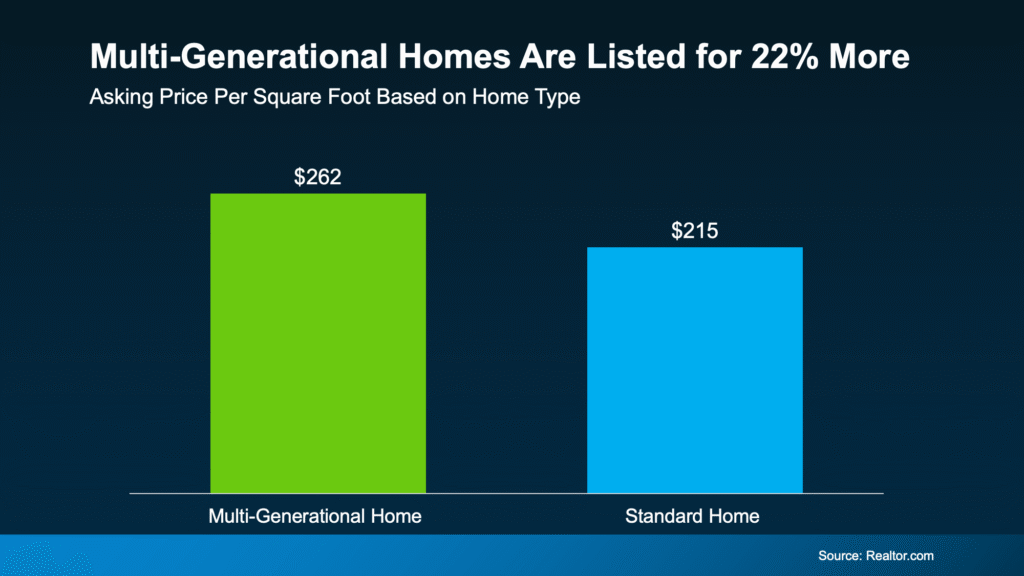
When comparing homes with similar square footage, multi generational properties still had a higher price per square foot. They averaged $262 per square foot compared with $215 for standard homes.
That works out to roughly a 22% premium for homes with features that can support multiple generations, including private suites, additional kitchens, and separate entrances (see graph below):
For homeowners thinking about selling, those details should not be treated as an afterthought. A room that seems ordinary to one buyer could solve a major need for another.
Presenting these spaces clearly in the listing can help buyers immediately understand how the home could work for their family.
Buyer Interest Remains Strong
Higher prices do not appear to be keeping interested buyers away.
According to the same Realtor.com report, multi generational homes received 13.5% more online views than standard properties. They also spent about the same amount of time on the market, selling in approximately 59 days.
Hannah Jones, Senior Economic Research Analyst at Realtor.com, explains:
“The strong demand and steep premiums we are seeing in inventory-constrained markets point to a real mismatch between what buyers are looking for and what is actually available. For sellers in these markets, this type of home can be a significant asset.”
That interest highlights something important for sellers. Buyers searching for these features may have fewer suitable homes to choose from. When a property offers the space, privacy, and flexibility they need, it has a better chance of standing out.
What This Could Mean for Your Home
If your home has a private guest suite, finished basement, second living area, extra kitchen, separate entrance, or simply enough space to give family members more privacy, those features could be more valuable than you realize.
The key is making sure buyers understand the possibilities. How a home is positioned and marketed can make a meaningful difference, especially when it offers something that is difficult to find.
If you are thinking about selling, let’s talk about the features that make your home unique and how buyers in our local market may value them.