Before using retirement savings for a down payment, understand the risks and explore the alternatives available to you.
For many would be homebuyers, coming up with enough money for a down payment is one of the biggest hurdles. And if you have spent years building a sizable 401(k), it may be tempting to look at that balance and wonder if some of it could help you buy a home sooner.
It is an option that has been getting more attention lately, especially as buyers continue to navigate affordability challenges. But having money available in a retirement account does not automatically mean using it for a home purchase is the best financial move.
Before touching money that was originally set aside for retirement, it is important to understand what you could be giving up and what other options may be available.
Why Your 401(k) May Look Like an Easy Solution
Many Americans have accumulated substantial savings in their retirement accounts over the course of their careers. Data from Empower shows the median 401(k) balance for people in their 40s through 60s reaches six figures (see graph below):

When a large amount of money is sitting in an account and the home you want feels just out of reach, using some of those funds can seem like a practical shortcut.
But retirement money serves a long term purpose. Depending on how the funds are accessed and your individual circumstances, using them now could result in penalties, taxes, or less money benefiting from future investment growth.
That is why it is worth looking beyond the immediate benefit of having more cash available for a home purchase. As Redfin says:
“If you’re struggling to save enough for a down payment, you may be wondering if tapping into your 401(k) is the right option. While it’s possible, doing so comes with significant risks, like early withdrawal penalties and lost investment growth.“
There can be potential advantages as well as disadvantages, and the impact will vary depending on your finances, age, retirement strategy, and how you access the money. A qualified financial professional can help you understand those tradeoffs before you make a decision.
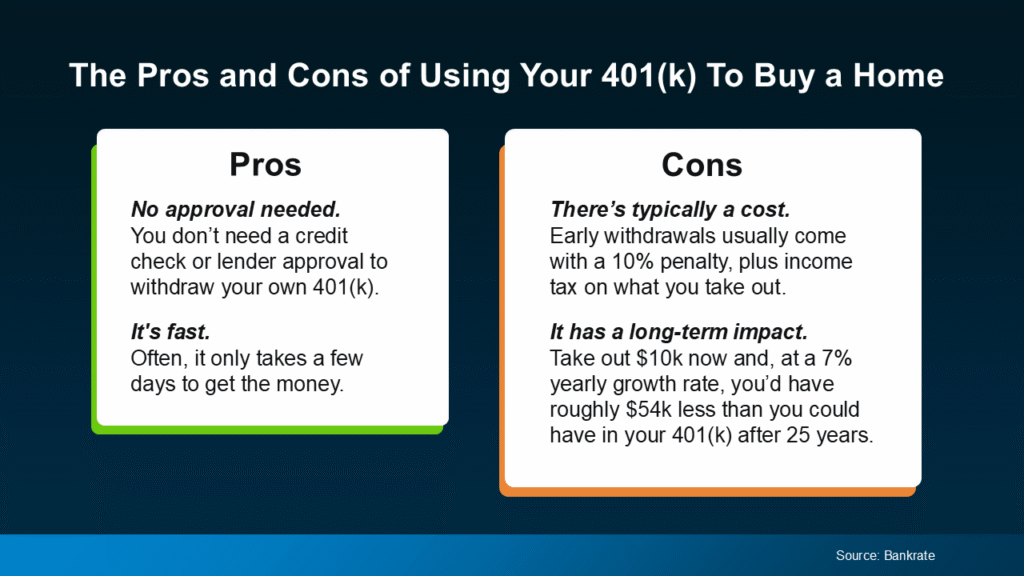
Bankrate highlights several of the potential benefits and drawbacks in the visual below.
Look at Your Other Down Payment Options
Using retirement savings is not necessarily your only path to homeownership. Before deciding to pull money from your 401(k), it is worth finding out what financing options and assistance programs you may qualify for.
- Low and No-Down Payment Loans: Some mortgage programs require significantly less than the traditional 20% down payment many buyers assume they need. FHA loans, for example, may allow qualified borrowers to purchase with as little as 3.5% down, depending on eligibility and credit requirements.
- Down Payment Assistance Programs: Depending on where you are buying and whether you meet program requirements, you may have access to assistance that can help with your down payment or closing costs. Programs vary by location, income, occupation, and other eligibility factors. Exploring these possibilities could change how much cash you actually need to purchase a home.
Build Your Financial Strategy Before You Start Shopping
Buying a home is a major financial commitment, and your down payment is only one part of the equation. You also need to consider your monthly housing expenses, closing costs, emergency savings, future financial goals, and retirement plans.
That makes planning especially important if you are thinking about using retirement funds.
Rather than making the decision based solely on how much money is currently available in your 401(k), consider how the choice fits into your larger financial picture. A financial advisor and a knowledgeable mortgage professional can help you compare different scenarios and determine which options make the most sense for you. As NerdWallet notes:
“Even if you’re convinced a 401(k) loan is the way to go, it’s important to understand the risks at the outset.“
Bottom Line
Saving enough to buy a home can be challenging, but your 401(k) may not be the only resource available to help you get there.
Before using retirement savings for a down payment, explore the loan programs and assistance options you may qualify for and speak with a trusted financial professional about the long term impact.
A little planning now can help you pursue homeownership without losing sight of the financial goals you are building toward for the future.